Pages

free counters
Saturday, April 10, 2010

Sun Moon Lake 日月潭

Sun Moon Lake is located at central Taiwan in the country of Nantou. Sun Moon Lake is famous for its stunning waters and its stunning mountain scenery. It is the largest and beautiful alpine lake. Why they named “Sun Moon Lake”? It is because the eastern part of the lake is round like the sun and the western side is shaped like a crescent moon.

Sun Moon Lake's beauty is created by the combination of mountain and water scenery, and its 760-meter elevation helps give the impression of a Chinese landscape painting with mist-laden water and clearly defined levels of mountains. Its crystalline, emerald green waters reflect the hills and mountains which rise on all sides. Natural beauty is enhanced by numerous cultural and historical sites. The constant changes of mists and moods on the lake make it impossible to comprehend in a single look, and thus, visitors like to linger here.

The beauty of the lake, from dawn to dusk and from spring and summer to autumn and winter, exudes an aura of enchantment regardless of whether it is bathed in sunlight or shrouded in mist.

Sun Moon Lake, rich in both natural scenic beauty and cultural landmarks, is like a lustrous pearl – radiant from whatever prospect you choose. Whether you are the first time visitor or a regular traveler to this part of Taiwan, please slow down your hurried travels, stay, and relax for a few days. Here, the beauty of nature will make you want to keep coming back!


Saturday, April 3, 2010

ALISHAN 阿里山

Alishan is located in Chiayi County, and it is one of the most famous sights in Taiwan. The natural landscapes are the main reasons for visitors to come. The popular scenic spots in Alishan include Fenchihu, Rueili, Fengshan, and Alishan Forest Recreation Area. There are connected mountain peaks low and high, streams and ponds. Vertical and horizontal in the area, which have not only utter danger of sheer precipices and overhanging rocks, but also the elegance of flying waterfall in deep valleys. The mountain is well known to the whole world for its four beautiful scenes of mystical tree, oriental cheery, a see of clouds and sunrise, thus goes the saying; "Those who haven't been to Alishan can not know the beauty of Taiwan."

Alishan Railway
One of the best ways to reach Alishan is by the area's famous narrow-gauge railway, which was built by the Japanese mainly to take advantage of Alishan's wealth of timber resources. The track has been in use since around 1912
. Despite massive deforestation during the Japanese occupation, the area's forests have largely been restored to their former glory by a careful program of reforestation and logging at as sustained rate.

The railroad certainly rates as one of the world's most scenic. The famous red engine pushes and pulls its carriages from an elevation of 30
meters to Alishan at 2,216 meters above sea level. In good weather, passengers can see astounding variety of flora and fauna as the train climbs from the subtropics to the pine forests in just 72 kolometers.

Mystical Tree of Alishan
Every tourist for Alishan is interested in withessing the majestic view of 'Mystical Tree of Alishan". On the east side of the Mystical Tree Railway Station of the main Peak of Alishan, there stands a sturdy towering tree slightly slant. Although the main trunk is broken, yet the branches on the top are green and verdant. The tree is about 52 meters high and the diameter is about 23 meters, which needs ten more people to jointly embrace it. It is estimated that its high age is 3000 odd years, a king tree in Asia.

Oriental Cherrry in Alishan
The oriental cherry all over the slopes of Alishan is also a wonder. During spring, red and white oriental cherry blossoms up hill and down dale, crowding together gorgeously. They mingles with the verdant forest, as if the peaks of Alishan had been splendidly attrired in green clothes dotted with red flowers, making one intoxicated.

Alishan's Sea of Clouds
In the evening, there appears often the magnificient sea of clouds in Alishan. Reaching the terrace at the peak, when one looks far into the distance, you can see the white clouds emerging form valleys and hovering with wind. Sometimes it looks like waves breaking and foaming with tides high and low. Sometimes it looks like earth covered with cotton, and you feel a vast expanse oh whiteness under you feet. When it is good day, the verdant sunset-bathed sea of cloud glitters in different colors, it appears more mystical and attractive.

There is a beautiful sun observation tower on the terrace of the famous Zhu Mountain peak of Alishan. At the crack of dawn, if you ascend the tower in the midst of freshness of air, you can see the grey outline of Yu Mountain far away would suddenly be edged with golden glow when radiance, increases all of a sudden.


Wednesday, March 31, 2010

Jiufen 九份

Jiufen is essentially a hill town which had gone through a fascinating past. Jiufen had been a quiet village nestled between the Pacific coast and the hills until the presence of gold in the area became known to the world outside. After the first mine was dug in 1890, the place became a bustling centre of gold seekers and traders. The little village soon grew into a prosperous town with tremendous prospects.

Today, Jiu Fen reflects its glory from the golden days. From the Japanese Colonisation period where people from all over the region flocked in to try their hands at fortune, the town is now a concoction of Japanese, Chinese and British architecture and cultural tinges. Also known as “Little Shanghai”, with much resemblance to the olden Shanghai era.


Visit the Jiu Fen Old Street and enjoy thoroughly the Jiu Fen lifestyle and culture. Red lanterns are predominately hung along the shop houses. The rows of shop houses have offer a wild variety of food, goodies, clothing, handicrafts, calligraphy, shoes, Chinese brushes and scrolls, jewelries, toys and souvenir of all sorts. There are also restaurants, street stalls and dessert shops. There are some famous dessert and snack such as yam dishes, stinky toufu and a few local specialties such as an ice cream mixed with vegetables and topped with peanut powder. Huazhi meatball is one of the famous specialties as well.


The scenery at Jiu Fen is also one that completes an overall sensory experience. There are several loggings and teahouses that oversee the village, bringing the beauty of Jiu Fen right before your eyes. Spend a leisure afternoon at a tea house up in the mountains where you can savor and enjoy the fragrance of local tea complete with stunning views of mountains, rivers and seas. You can also witness traditional tea ceremonies and learn of the art of tea appreciation.


yam dishes

huazhi meatballs

ice cream mixed with vegetables and
topped with peanut powder,
this dessert looks like "popiah" in Malaysia

nice scene of Jiu Fen


Monday, March 29, 2010

Taipei 101 臺北101

Taipei 101 (臺北101), also known as the Taipei Financial Center located in Xinyi District near Taipei City Hall. Taipei 101 is Asia's tallest skyscraper with 509 meters tall and was designed by Taiwanese renowed architect Zu-Yuan Li. Taipei 101 is the landmark in Taipei City and designed based on the Chinese lucky number 8. Taipei 101 comprises 101 floors above ground and 5 floors underground. Taipei 101 has the world's fastest elevators that can travel 9 floors in just 37 seconds.

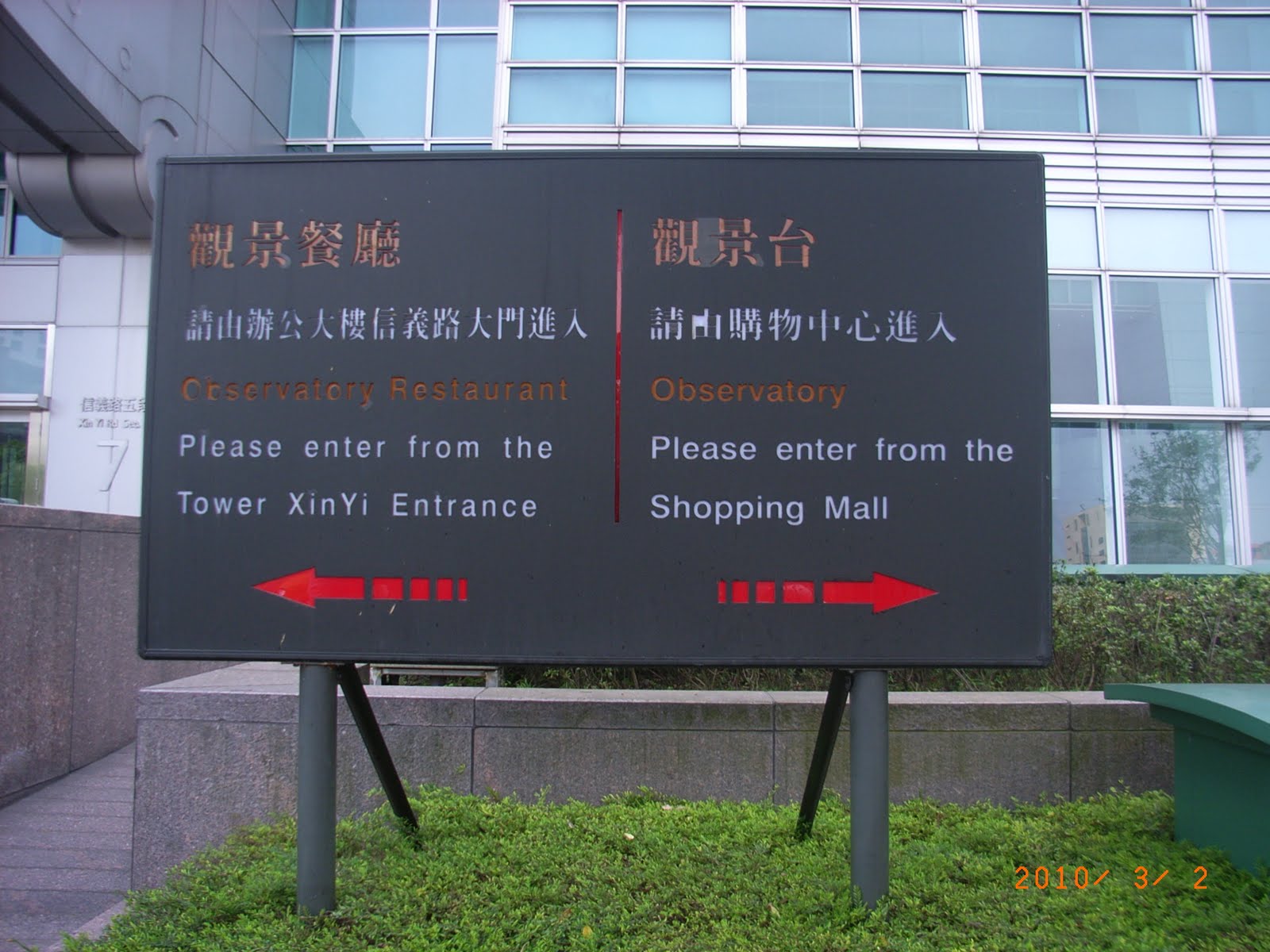
The name of the tower reflects its floor count and carries symbolic meanings alluding to technology and Asian tradition. Its postmodernist approach to style incorporates traditional design elements and gives them modern treatments. The tower is designed to withstand typhoons and eatrhquakes. A multi-level shopping mall adjoining the tower houses hundreds of fashionable stores, restaurants and clubs.

... 如同帝國大廈之於紐約、艾菲爾鐵塔之於巴黎、更如 晚近的金茂大廈之於上海,面對二十一世紀,北需要更寬廣 的舞台、更亮眼的演出,高度508公尺,地上 101層,地下5層的TAIPEI 101專案即是「將北帶向全世 界」(Bringing Taipei to the world )的希望工程.TAIPEI 101931231日舉行大樓開幕典禮,除了宣示TAIPEI 101進入全新的營運階 段,當晚的跨年點燈配合炫麗 耀眼的煙火秀,更是成功的向世人宣告TAIPEI 101的時代來臨 ...


Saturday, March 27, 2010

XIMENDING 西門町

Ximending as the “Harajuku” of Taipei. The entire area is known as the largest pedestrian area in Taiwan and it packs a powerful punch. On weekday nights and weekends, the trendy streets of Ximending are where you want to be if you are looking for Taipei’s young, hip crowds. Especially on weekend, visitors might see teens and young adults wearing special costumes known as cosplay. This is urban pop culture at its best. Ximending is also a great place for shopping, with thousands of vendors deliver the latest Japanese, Western, and local fashions.


With kitschy restaurants, karaoke, movie theaters, department stores, outdoor food carts, and individual street vendors lining the streets here, Ximending attracts a whopping 3 million shoppers each month. Storefronts are a jumble of colored lights, naked wires, and beautiful works of graffiti. This is where you’ll find tattoo and piercing shops.


You can expect the same things with the vivacious district of Ximending. There are towering billboards everywhere you look and glitzy lights practically light up the entire place. Stores line every street and shops overflow literally from every corner. You could easily strain your neck when you look up at the towering buildings and you will surely be mesmerized by the modern shopping malls that offer a wide arrange of goods like electronic items, personal care stuff, clothing, footwear, bags, souvenirs, Taiwan's traditional handicrafts among others. Anyone with an interest in Japanese culture and modern pop culture in Taiwan will adore the streets of Ximending. It is THE place to hang out in Taipei.


There also have a number of stalls sell different Chinese charms like beads with elegemt design as well as jewellery items that are made of jade. You can also find other traditional items like delicate Chinese scrolls, meticulously prepared bamboo products, and really lovely Chinese watercolour paintings. Some specialty shops just concentrate on pottery and ceramic items like beautiful tea sets that are sold different prices.


In Ximending , the dreams of artists are never far out of reach. Don't miss this unique and trendy part of Taipei when you come to travel Taiwan.


Sunday, March 21, 2010

National Chiang Kai-shek Memorial Hall 國 立中正紀念堂


The National Chiang Kai-shek Memorial Hall (國 立中正紀念堂; 现名为自由广场) is a famous monument erected in memory of Chiang Kai-shek, former President of the Republic of China. It is located in Taipei, Taiwan, Republic of China.

The monument, surrounded by a park, stands at the east end of Liberty Square. The structure is framed on the north and south by the National Theater and National Concert Hall. The entire plaza is located within sight of the Presidential Office Building.


The Memorial Hall

Memorial Hall is white with four sides. The octagonal roof rises 70 meters above the ground and is covered with blue glazed titles. The blue and white colors of the building and the red color of the flowerbeds echo the colors in the flag of the Republic of China. The octagonal shape picks up the symbolism of the number 8, a number traditionally associated in Asia with abundance and good fortune.


Two sets of white stairs, each with 89 steps to represent Chiang's age at the time of his death, lead to the main entrance. The main entrance features a pair of double doors, each standing 16 meters high and weighing 75 tons, that open into the main hall. A large bronze statue of Chiang Kai-shek dominates the main hall. The figure is shown smiling, seated and wearing traditional Chinese dress. Inscribed on the wall above and behind the seated figure are the Chinese characters for Ethics, Democracy, and Science. Inscriptions on the side walls read The purpose of life is to improve the general life of humanity and The meaning of life is to create and sustain subsequent lives in the universe. An elaborate caisson is set into the ceiling, decorated with the emblem of the Kuomintang (KMT). Representatives of the armed forces guard the main hall during its open hours. (The branch of service represented changes periodically according to a rotating schedule.) The changing of the guards take place every hour, attracting many visitors.


The ground level of the memorial houses library and museum documenating Chiang Kai-shek's life and career and exhibits related to Taiwan's history and development